
Baltimore City Active Warrants Explained
Active and outstanding mean the same thing in practice. A warrant is issued and simply has not been served, recalled, or satisfied yet. The label describes a court order, not a person. What it says about the underlying charge is nothing at all. Maryland also does not publish one statewide warrant register. What the public can reach is Maryland Judiciary Case Search, which shows public case summaries and docket events from both the District Court and the Circuit Court. A Baltimore City warrant appears there as a docket entry once the clerk enters it in a public record.
There Is No Baltimore City Public Warrant Roster
Neither the sheriff's office nor the police department publishes a searchable list of every open warrant. The sheriff's public pages describe execution of arrest warrants and a dispatch center that keeps the internal database of active Circuit Court warrants, but no public name form sits behind it. The police department posts news and a records request route. That is not a warrant roster. Law enforcement systems shared among agencies are enforcement tools, not self-check portals, and a person cannot read them from a browser. So the absence itself is the answer. In Baltimore City, a court record, not a departmental list, is the public way to check for outstanding warrants.
Note: A directory site that claims to show every Baltimore City warrant is not an official source, and its list cannot confirm anyone's status.
How Baltimore City Tracks Active Warrants
Tracking runs in two layers. The courts keep the case record and the docket, while the sheriff's office keeps a working database for service on Circuit Court warrants. The two do not always match. A warrant can be current in one system and still missing from the other, because the public index follows the court's own entry timing. For felony and serious criminal warrants, the office that holds the file is the circuit clerk's criminal counter. Baltimore City readers can see the court's own description of that section through the Circuit Court for Baltimore City, Criminal Division.
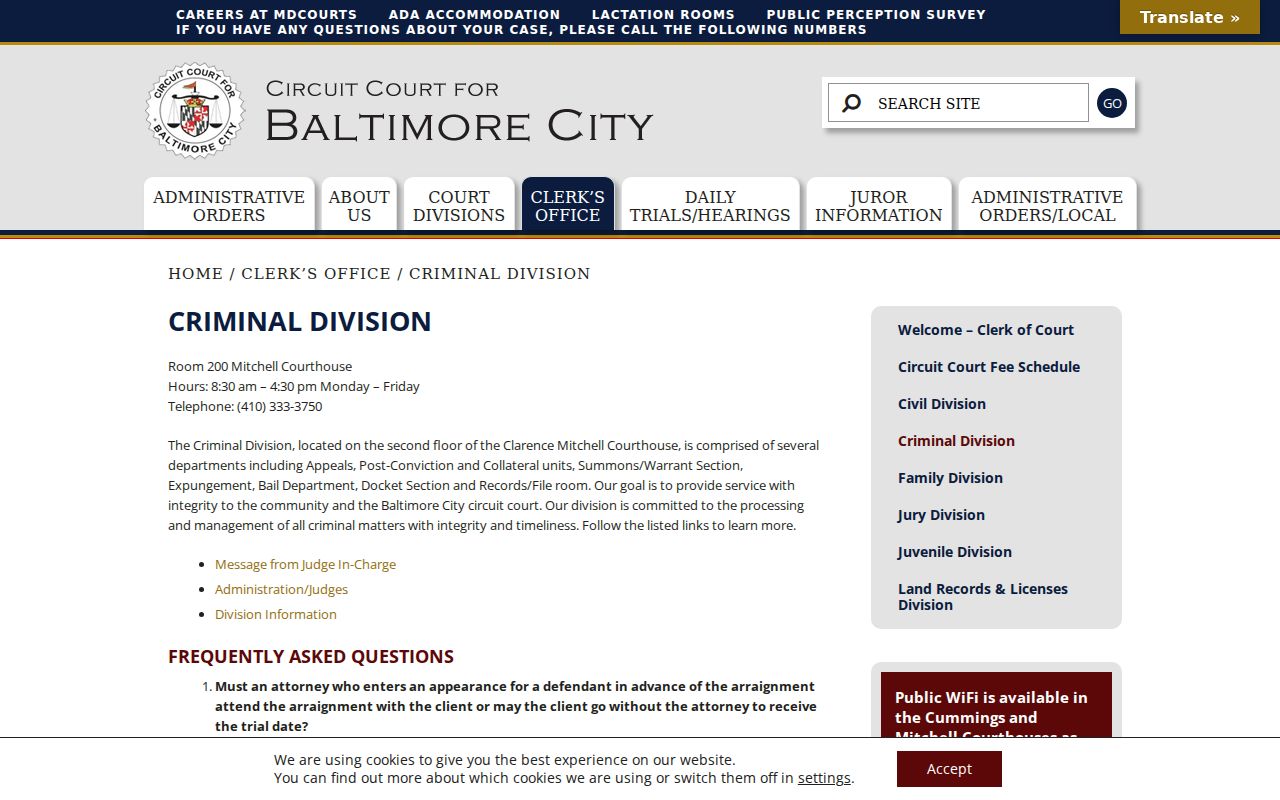
The Summons/Warrant Section and the Bail Department listed on that page are the offices a person calls about a circuit warrant in Baltimore City. The court itself describes them there.
Note: The list lags real events. A name missing from a public result is not proof that no warrant exists.
Why a Recent Baltimore City Warrant May Not Appear
Entry timing explains most surprises. A Baltimore City warrant can be signed and entered into law enforcement systems yet still be absent from the public index for a day or more. The clerk finishes the docket entry on the court's schedule, not the searcher's.
- A warrant issued within the last day or two
- A sealed indictment or restricted arrest-warrant material
- A juvenile matter, which is confidential
- A case sealed, shielded, or expunged by court order
- A minor traffic file that moved to history after 36 months
- A case held by the other court level than the one searched
These gaps do not close on their own. The fix in Baltimore City is a direct call to the clerk who holds the file.
Inside an Active Warrant Record
A public entry carries a docket and a set of identifiers. Maryland publishes no standard active-warrant status code. The public interface does not promise a warrant number, an issuing judge, or a service detail. Still, the fields listed carry real information about a Baltimore City case.
| Case Number | The identifier to reuse on every later request. Copy it exactly as returned. |
|---|---|
| Court | District Court, District 1 or the Circuit Court for Baltimore City. |
| Charge | The offense as docketed, with a classification where one is public. |
| Warrant Event | An entry such as FTA/Bench Warrant or a document-issued line. |
| Bond | Amount and type when a bond event is recorded. The figure is case-specific. |
| Return and Status | Service, commitment, release, recall, and disposition events appear as they are entered. |
When a Warrant Leaves the Baltimore City List
A warrant stops being active in three ways. A judge recalls it, it is served and the person is processed, or the underlying case resolves in a way that satisfies the court. Recall is a judicial act, and only the issuing court can perform it. A clean web result is not the same thing. Removing a line from a public display does not dismiss a charge, and a Baltimore City search that comes back empty is not a clearance certificate. The record that matters is the docket entry, and the clerk is the person who can explain it. There is also no automatic expiration. An old case can stay live until the court acts on it.
Warrant Roundups and Most-Wanted Lists
Baltimore City does not run a standing warrant roundup. No current amnesty week or safe-surrender window appears in city or state materials. What the region does have is a curated tip program. Metro Crime Stoppers of Maryland covers Baltimore City and runs an anonymous tip channel with a reward process for information that locates a wanted person.
Key Point: A curated program is not a complete warrant list, and it is not a way to check your own status. The official program page describes the tip line and the reward rules: Metro Crime Stoppers of Maryland.
Describe and link the program rather than republishing anyone's name or photograph. The official page is the authoritative source, and entries change as cases close.
Baltimore once held child-support reconciliation events that offered a courthouse path to resolve support warrants without arrest, but that material is old and no such program runs now. The current route for any warrant is the issuing court. The most wanted list page explains how the Baltimore City tip program works in more detail.
The Enforcement Units Behind Baltimore City Warrants
Service is shared, and the assignment depends on the case. The Baltimore City sheriff's Special Operations unit handles Circuit Court criminal warrants. The police department's Warrant Apprehension Task Force works violent-crime cases and partners with state and federal teams on fugitive enforcement.
A federal task force operation covering the Baltimore area reported those figures for the period ending in April 2025. A later operation in early 2026 confirmed the same partnership layer. Both are enforcement outcomes, not a count of Baltimore City's open warrants. Neither produces a public list.
When Your Name Is on the Warrant List
A public case record with your name in it calls for a steady hand. Don't ignore it. Find a lawyer first, before you contact the issuing court yourself. Counsel can ask Baltimore City about a recall, seek a new hearing date, and set up an appearance the judge expects, rather than one that arrives as a surprise.
Important: Do not walk into a courthouse or a police district to ask about your own warrant without legal advice. An active warrant authorizes arrest on contact with law enforcement.
Three ways exist to clear a warrant in Baltimore City. A recall motion, a bond posted where a judge sets one, or a scheduled appearance at the bench. Every route ends at the issuing court. The Baltimore City warrant records home page lays out each step in full.
Sealed and Juvenile Baltimore City Records
Not every gap in Baltimore City's public record is an accident. Maryland's judicial access guidance treats certain arrest-warrant records as off limits, and juvenile police and court files stay confidential except in narrow circumstances. Those closures are policy, not a system failure. Sealed search warrant papers work under their own rule, where a judge can keep a supporting affidavit shut for a set period. So a search that turns up nothing on a case that plainly exists may be pointing at a closed file rather than a lost one. Ask the clerk. The person named in the record, or that person's attorney, can ask the Baltimore City court directly what parts of the file get released and to whom.
Requesting a Baltimore City Warrant Record in Writing
Sometimes a screen result is not enough. A lawyer or a court wants paper. A written request for a Baltimore City warrant record produces an actual document, and requests for agency records go through the Maryland Public Information Act. The state publishes guidance with a sample letter and the fee rules at the Maryland Attorney General MPIA guidance page.
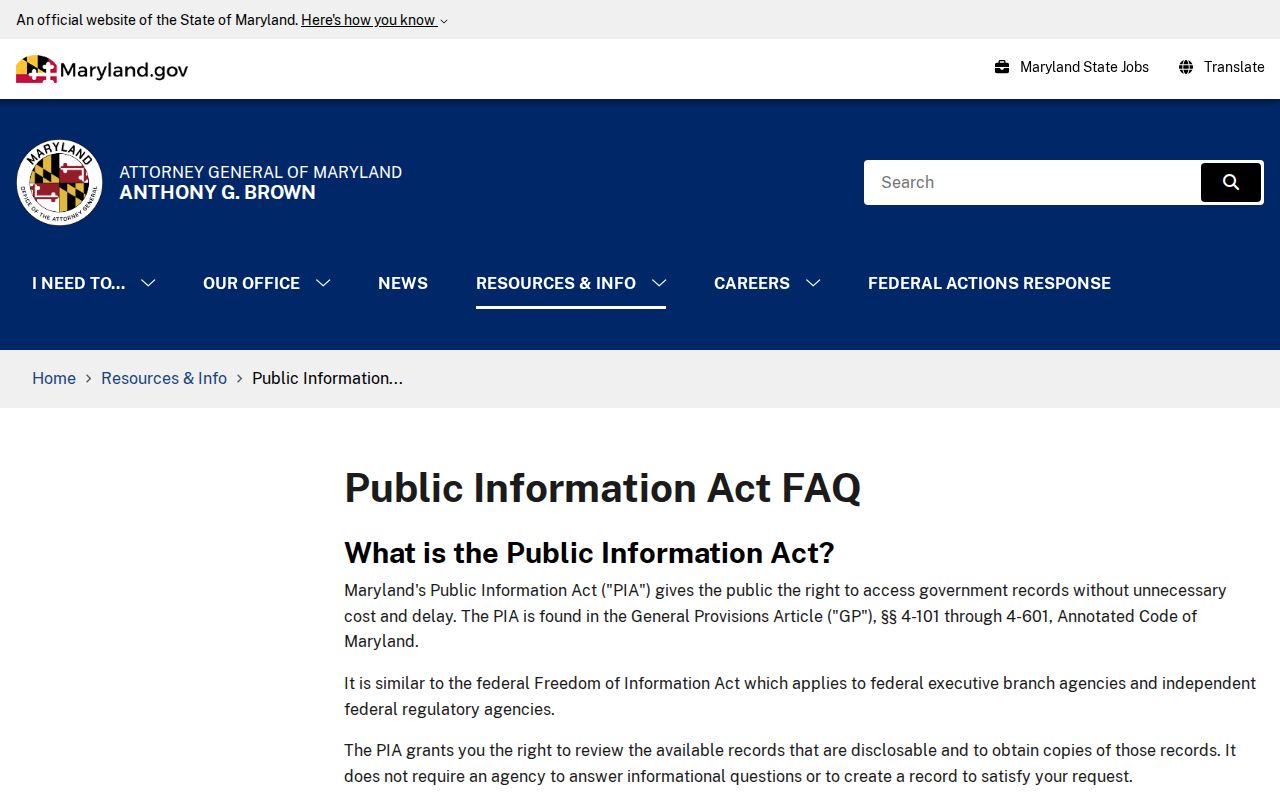
That guidance covers who to address in Baltimore City, how long an agency usually takes, and when fees apply. In short, the essentials a request needs before filing.