
Baltimore City's Most Wanted Program
Metro Crime Stoppers of Maryland runs the Baltimore City program. The volunteer organization got its local start in 1981. Its service territory covers Baltimore City plus seven surrounding jurisdictions, and local police agencies submit cases to it and receive the resulting tips. Understand what it is not. It is a tip and reward service rather than a law enforcement agency. It issues no warrants, serves none, and clears none, and it keeps no searchable warrant database. A Police Council drawn from the participating jurisdictions reviews tip information and authorizes rewards.
Note: Because the program is curated, the notices it publishes are a selected subset of open cases, not a full active warrant list for the city.
The 1-866-7LOCKUP Anonymous Tip Line
The tip line never sleeps. Call 1-866-7LOCKUP at any hour. An anonymous online submission system works too. No name is required. Every tip routes to the police jurisdiction handling the case, and the program's role is to move information from the public to investigators without exposing whoever supplied it. Contacting the police directly can end that anonymity. That is why Metro Crime Stoppers of Maryland runs its own channel for Baltimore City tipsters.
How the Most Wanted Lists Work
Cases reach the program from participating law enforcement agencies, not from a court calendar. That split matters. A warrant record tracks what a judge has signed. The most wanted page shows only what agencies submit, and it changes as cases close, so it is never a snapshot of every open warrant in Baltimore City. The program publishes no fixed weekly or monthly refresh schedule. A notice can linger after an arrest or come down before a new case appears. Treat the list as a public appeal for information. Confirm legal status with the court.
The P3 Code That Protects a Tipster
An online tip generates a unique code. Keep it. That code is the only link back to the submission, letting a Baltimore City tipster check status or exchange follow-up information with the investigator, since no name sits on the file. Lose the code and communication ends. Share it with someone else, and that person can stand in as the tipster. Write the code down somewhere safe before closing the browser.
Note: The code also protects the anonymity the program promises, so anyone who values that anonymity should keep it private.
Reporting a Tip Safely
Reporting is a civic act with a right way to do it. Use the program channel. Give what you actually know, and never approach the person or try to verify a Baltimore City case yourself.
Key Point: The official instruction is to submit information anonymously and leave the contact to law enforcement. Reward decisions follow an arrest and filed charges, not a sighting. The program page explains the process: Metro Crime Stoppers reward rules.
Call 911 when you feel unsafe or see a crime in progress. The tip program is no emergency service for Baltimore City, so urgent situations need the emergency number first.
How Baltimore Rewards Are Approved and Paid
Two reward numbers matter. Information that locates a wanted person generally carries a standard reward of $150, and the program advertises a maximum of up to $2,000 for qualifying information. Larger private or government rewards carry their own conditions. The tip must help the police jurisdiction find and charge the person. A Police Council or board then reviews and authorizes payment. Cash is paid at a mutually agreed location. The tipster must present the code to collect. A tip alone never earns a reward. Nobody pays anything to submit information, either, because the program takes Baltimore City tips and charges nothing for them.
Most Wanted Lists vs Active Warrants
A Baltimore City most wanted notice and an active warrant record answer different questions, and legal status comes only from the second.
| Point | Most Wanted Notice | Active Warrant Record |
|---|---|---|
| Who publishes it | A tip and reward program | The court, through its public case index and clerk |
| What it covers | Cases submitted by agencies | A specific case and its docket events |
| How current it is | Updated as cases are submitted and closed, with no fixed schedule | Entered by the clerk as events occur |
| What it can confirm | That the program is seeking information | What the court record says about the case |
A curated notice cannot confirm warrant status. A missing notice proves nothing either way, so the outstanding warrants page explains how to read the court record in Baltimore City.
Federal Fugitive Programs in the Baltimore Area
A federal layer works the same region. The U.S. Marshals Service district office sits in Baltimore. A regional fugitive task force pairs with state and local agencies on cases that cross jurisdictions. Those operations have produced hundreds of arrests and closed warrants in the Baltimore City area in recent years. The agency publishes news releases, not rosters of individuals. The U.S. Marshals Service, District of Maryland page lists the office location and its contact route.
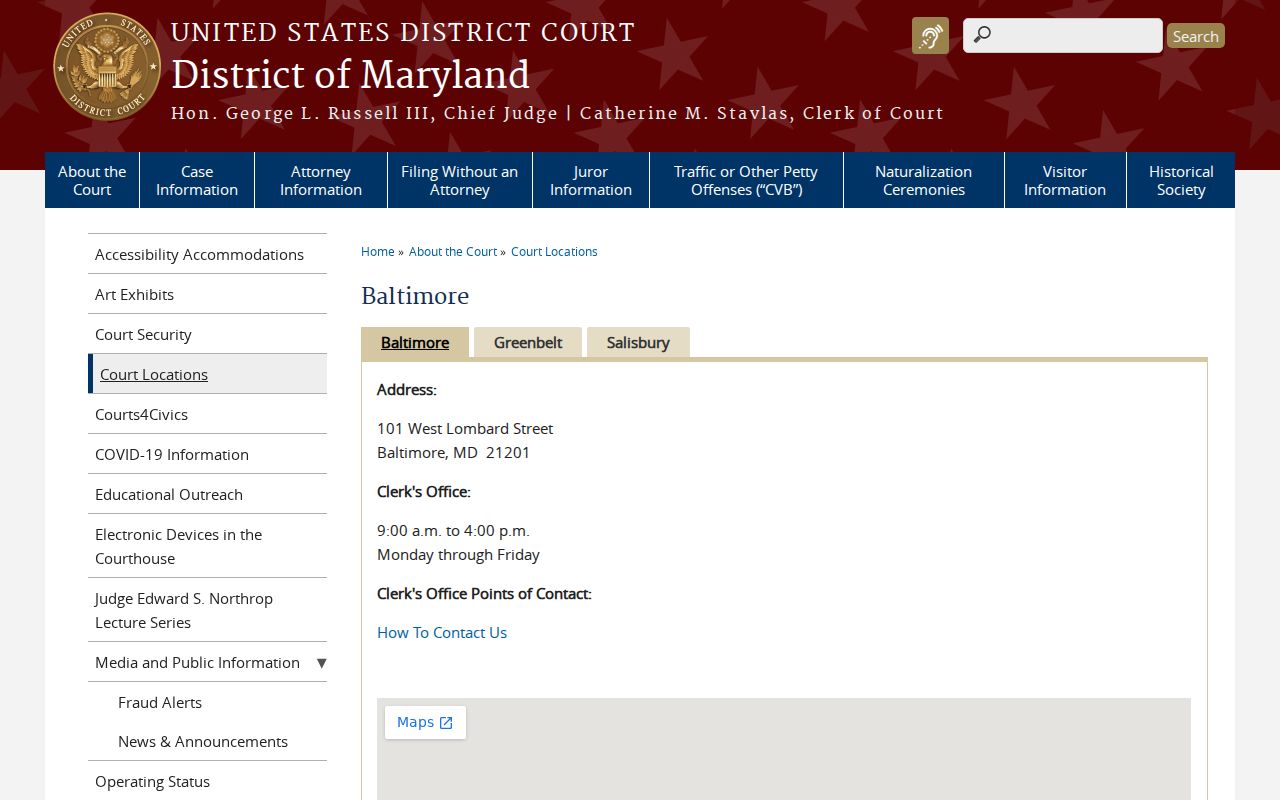
A federal warrant question belongs to the marshals. The courthouse and marshal district pages carry the office location and contact route, not a private lookup site, for readers in the Baltimore City area.
If You Think You Are on a List
Hearing your name might be on a published list is frightening. Do not call the program. Get a lawyer. A lawyer can check the court record, confirm whether a Baltimore City warrant actually exists, and contact the issuing court about a recall or a court date.
Important: Do not approach anyone connected to a posted notice, and do not try to resolve it through the tip line. Contact an attorney and the issuing court instead.
A post on social media is not proof that you have a warrant in Baltimore City. Neither is a caller who says so. Only the court record can confirm one. A blank spot on a program page tells you nothing, and only a judge can recall a warrant once it exists.
What the Baltimore Program Is Not
Most confusion about the Baltimore City program comes from three wrong assumptions. People treat it as a warrant database, but it is not one, so a search there settles nothing about legal status. They treat it as a court, yet it has no power to recall or clear anything. And they treat it as a screening service, when nothing on it replaces a court record or a background check run under the rules that govern those. Seen plainly, the program is a public appeal for tips with a reward attached, and that is a real civic job. Seen as a status check, it misleads people in both directions: it can suggest trouble where there is none, and it can miss trouble that is very real. So use it for what it is. If you need an answer about a warrant, the clerk of the issuing court is still the person to ask, and the record in that court is the only answer that counts.